 |
 |
|
|
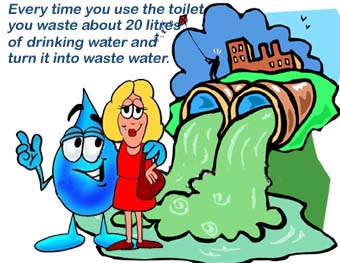
Every time we use
the bathroom we waste
an average of 10-20
liters of water, in most of the cases potable water that we change
into dirty waste water which could cause a serious environmental problem,
not only because we conduct these contaminated waters into the channels
of the rivers, but also because of the little advantage of that water
for other purposes, thus losing its The shortage of
natural hydric resources in barren
and semi-arid zones constitutes a problem, sometimes dramatic, for
the population living in them, as it is the case of the Mediterranean
regions,because in this zone the increasing accumulation of population
and the little precipitation and limited superficial resources, are
leading to the exhaustion
of the underground resources.
In this context, the reuse of the urban waste water functions as an
additional source of water which we can take into account in the global
management of the hydric resources. These resources can be These waste waters produced in daily life must suitably be transported and be treated. We need an infrastructure composed of culverts and collectors and water purifiers that enable the return of the water to the environment in compatible conditions. Next to this measurement
of reusability of residual
waters there are other traditional ones like the transport from
overflowing river basins, the construction of dams
and other more innovating and expensive measures like the desalination
of seawater.
|
||
 energetical
and economical benefits. Waste water is the water that has been used
in our houses, in the industry, in agriculture and in the services.
We can include here the rainwater that runs down the streets and free
spaces, the
energetical
and economical benefits. Waste water is the water that has been used
in our houses, in the industry, in agriculture and in the services.
We can include here the rainwater that runs down the streets and free
spaces, the  reused
for agriculture, fish farming, the underground water charge, etc.
reused
for agriculture, fish farming, the underground water charge, etc.